Lithium-ion batteries are now found almost everywhere: in power tools, e-bikes, smartphones, power banks, RC products, e-cigarettes and countless devices used in commercial environments. High-quality batteries are generally reliable and safe when used correctly. However, the risk can increase significantly after an impact, mechanical damage, incorrect charging or excessive heat.
How can a potentially dangerous battery be identified, and what should you do in an emergency?
How can you identify a damaged lithium battery?
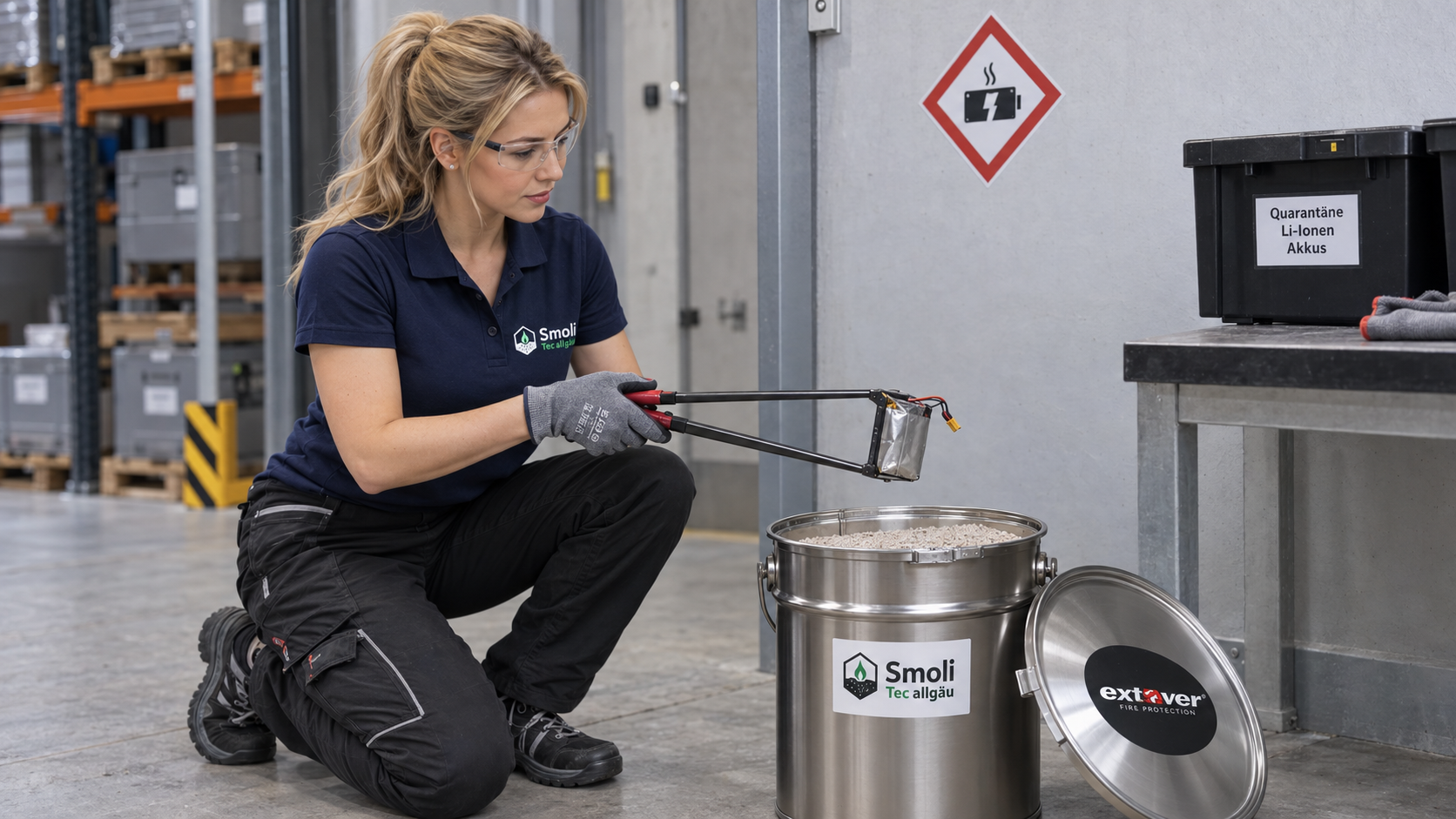
Not every defect is immediately visible from the outside. However, certain warning signs should always be taken seriously:
• The battery is swollen or visibly deformed.
• The casing has cracks, dents or punctures.
• The battery has been severely crushed or dropped from a significant height.
• Liquid is leaking from the casing.
• An unusual pungent or sweet chemical odour is noticeable.
• The battery becomes unusually warm or hot for no apparent reason.
• Hissing, cracking or other unusual noises can be heard.
• The battery is smoking, venting vapour or changing colour.
• Charging time, performance or operating time has suddenly changed significantly.
Even if a battery appears undamaged after being dropped, cells or internal separators may have been damaged. If there is any doubt, the battery should no longer be used.
What should you do immediately?
A suspicious battery must not be charged, used, opened or repaired. Disconnect it from the device and charger only if this can still be done safely.
If the battery is already hot, continues to swell, hisses, smokes or leaks, it should no longer be touched or moved. Keep your distance, warn other people, leave the hazardous area and call the fire service in an emergency. Smoke and escaping vapours must not be inhaled.
For a cold and stable but mechanically damaged battery, the next steps should be agreed with a municipal collection point, specialist waste company or the manufacturer. A visibly damaged battery should not be transported to a collection point without contacting them first.
What should you never do?
• Recharge or continue using the damaged battery
• Open, cut or puncture the casing
• Compress or flatten a swollen battery
• Touch exposed terminals with metal objects
• Immerse the battery in water
• Leave it unattended in a home, office or storage area
• Place it in household waste, commercial waste or an ordinary battery collection box
• Carry a hot, smoking or unstable battery through a building
• Transport it in a vehicle without prior professional advice
One incorrect movement can cause an internal short circuit or further damage.
Safe temporary storage and quarantine
Cold, stable and suspicious batteries should be stored separately from undamaged batteries, combustible materials and escape routes. Temporary storage must take place in a suitable solution on a non-combustible surface.
Companies should address the handling of damaged or suspicious lithium-ion batteries in their risk assessment and operating instructions. This should include designated quarantine areas, trained personnel, appropriate personal protective equipment and clearly defined reporting, transport and disposal procedures.
Depending on the battery type, condition and capacity, dedicated safety containers, LiBa® drums, Extover® cushions or solutions containing mineral Extover® granules may be used. The granules can thermally separate a battery from its surroundings and absorb heat released during a fire event. However, the solution and its dimensions must always be selected according to the specific battery and intended application.
Disposing of damaged lithium batteries
Lithium-ion batteries must never be placed in household or residual waste. They can cause serious fires in refuse vehicles, sorting facilities and recycling plants.
Undamaged used batteries can generally be returned through designated collection and take-back systems. For damaged, swollen or otherwise suspicious batteries, the collection point should be contacted in advance and informed about the battery’s condition. Its staff can explain whether and under what conditions the battery can be accepted.
Additional dangerous-goods requirements may apply to commercial users depending on the battery’s condition, type and transport route. A qualified waste disposal or dangerous-goods specialist should be consulted, especially if the battery is damaged or considered unsafe for normal transport.
Prevention provides the best protection
Many critical situations can be avoided through careful handling:
• Use only suitable chargers in technically sound condition.
• Do not leave batteries completely unattended while charging.
• Keep charging areas free from easily combustible materials.
• Protect batteries from impacts, moisture and extreme temperatures.
• Do not use damaged cables, connectors or casings.
• Regularly inspect batteries for deformation or unusual heat.
• Remove suspicious batteries from normal operations immediately.
• Define clear responsibilities and emergency procedures within the company.
SmoliTec helps you select the right safety solution
Requirements vary considerably. A single power bank requires a different solution from a power-tool battery, e-bike battery or larger industrial battery.
SmoliTec allgäu offers solutions for the safe storage, quarantine and handling of lithium-ion batteries – from Extover® cushions and mineral fire-extinguishing granules to LiBa® safety containers and the double-walled EasySafeBox. For commercial customers, we can develop a suitable concept based on the battery types, capacities and operating processes involved.
Important: This article provides general information and does not replace an individual risk assessment, dangerous-goods consultation or instructions from the fire service. If a battery is hot, smoking, hissing or otherwise unstable, always keep your distance, leave the hazardous area and contact the emergency services.